Climate Change in Alaska
Last modified: 30th November 2023
Articles
Since the Industrial Revolution, greenhouse gases have accumulated in the earth’s atmosphere in greater concentrations than would naturally occur. This has happened largely as a result of burning fossil fuels. The changes in the composition of the atmosphere have caused atmospheric temperatures to rise, changing the global climate. Though climate change results in higher average temperatures around the world, effects in individual locations vary, and can include increases in rain and snowfall, storminess, flooding, drought, erosion, and even local cooling. Though the effects of climate change are unpredictable, scientists generally agree(3.7 MB) that the majority will be negative for the economy, and for the health and survival of humans and many other species.
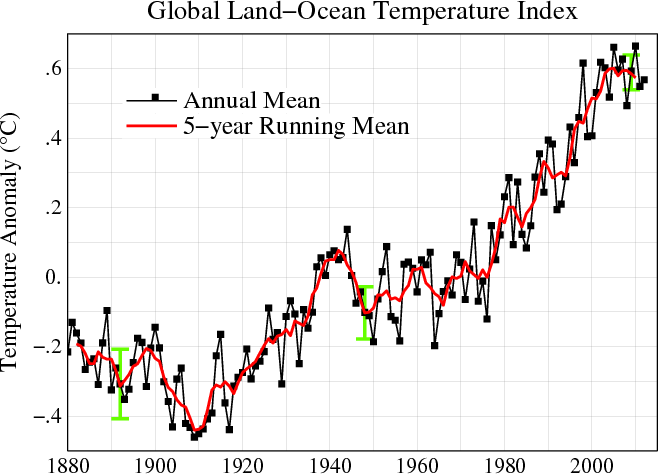
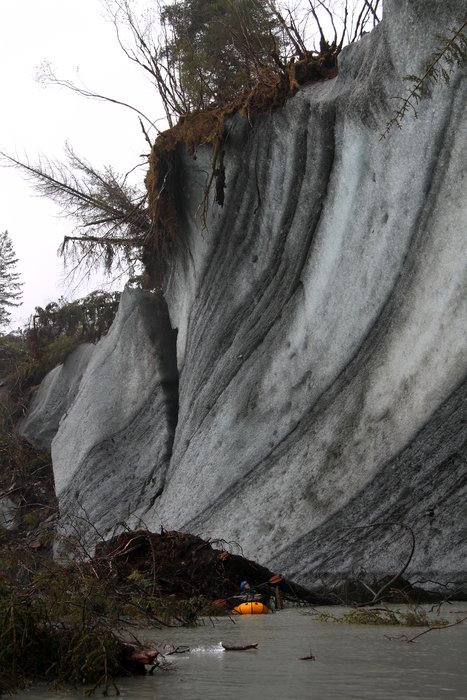
Alaska has become a focal point in the discussion about how we should react to the threat of climate change. The state is already experiencing several conspicuous effects of climate change that can be clearly seen and measured. These include glacial retreat, thawing permafrost, ocean acidification, sea ice retreat, shorter ice road seasons, and coastal erosion. In addition, changes can be observed in the timing of seasons, the composition of different ecosystems, the behavior and abundance of game animals, and in forest fire risk.
Alaska is potentially in a position to take a leadership role in mitigating future climate change. Most important is the Alaskan position of influence over a large part of the world’s fossil carbon reserves. Though Alaska’s oil reserves are dwindling, Alaska possesses a large portion of the world’s remaining coal, and has huge unconventional natural gas reserves trapped in permafrost and seafloor ice in the arctic. Much of the state’s economy is based on the oil industry and taxes on oil provide most of the state government’s revenue. Continuing to develop Alaska’s unexploited fossil fuel reserves would provide ongoing economic benefits in the form of jobs and tax revenues.
However, if all this fossil carbon is extracted and burned, it would dramatically increase the consequences of climate change. Alternately, Alaska could commit to leaving this carbon sequestered, and build its economy on the foundation of sustainable industries like fishing, renewable electricity, and small-scale timber.
Created: Jan. 19, 2018