- Summary
- Location and ownership
- Mine plan and power requirements
- Environmental concerns
- Benefits of the mine
- Current status
Summary
The Donlin Gold project is a proposed gold mine located in southwest Alaska. This prospect is expected to produce around 1.5 million ounces of gold per year, and has an estimated resource base of around 34 million ounces (almost $56 billion at February 2013 prices), making it one of the largest undeveloped gold resources in the world. While not as large as the controversial Pebble Mine (100 million ounces of gold), the Donlin gold project shares some of the same environmental concerns, including possible acid mine drainage, impacts on fish populations, and effects of cyanide use at the mine. Of the greatest concern at Donlin is the possible release of thousands of pounds of toxic mercury, and the transportation off-site of many tons of mercury per year. However, due to the relatively remote location, the support of local native groups, and the lack of a significant commercial fishery in the watershed, the Donlin Gold project has encountered relatively little opposition.
Location and ownership
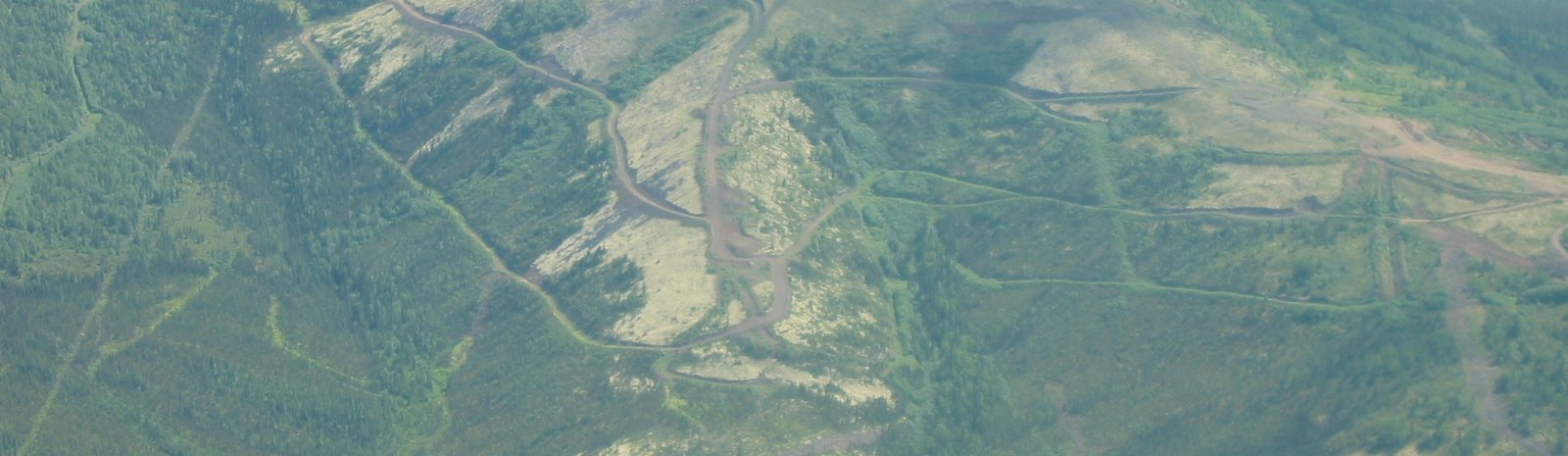
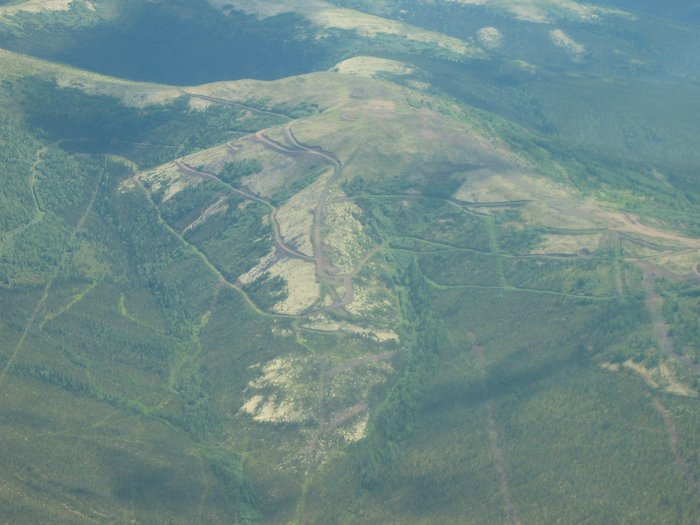
The Donlin Gold project is in the Yukon-Kuskokwim Delta in southwest Alaska. The project is near Donlin Creek, 12 miles from the Kuskokwim River, and upstream of Crooked Creek. The nearest community is that of Crooked Creek, and Bethel is 120 miles downstream, near the mouth of the Kuskokwim River. Placer mining began in this area around the start of the 20th century, continued for over 50 years and then was followed by many years of exploration searching for the source of the placer gold. Exploration for this particular prospect has been underway since 1995.
Kuskokwim Corporation owns the surface rights to the land, and Calista Corporation owns the subsurface rights. The project proposal is being managed by a company called Donlin Gold LLC which is owned 50/50 by NovaGold Resources Inc. and Barrick Gold Corporation Inc.
Mine plan and power requirements
The Donlin Gold project has proposed an open pit mine, measuring up to 2.2 miles long and 1 mile wide. There is no infrastructure in the area, so the mine would need to construct an airstrip, housing, roads and a port on the Kuskokwim River in addition to the mine buildings themselves.
At Donlin, solid rock waste would be stored in a pit near the mine and a valley nearby. Mine tailings would be stored in an artificial pond with a synthetic liner behind a large earthen dam (460 feet high and 5,800 feet long). The mine is expected to process 59,000 tons of ore per day for the 27-year lifetime of the mine, and to store over 3 billion tons of waste rock and tailings.
The mine would require an average 130 MW of power, with a peak load of 152 MW. The difficulty of providing this power has been a significant hurdle during the planning process. Discarded options have included constructing a coal-fired power plant near Bethel, to on-site nuclear, peat, biomass, coal or hydro. In the 2009 feasibility study for the mine 8.9 MB, the operators settled on river-transported diesel and a small wind farm. However, during 2010 the company decided instead to build a 315-mile, $834 million underground natural gas pipeline from Cook Inlet that would replace both the diesel and the wind farm. This pipeline would run alongside the historic Iditarod Trail in several places. In May 2014, the company applied for the right of way to built the pipeline.
Environmental concerns
Four of the major environmental concerns relating to the proposed Donlin Gold project are potential acid mine drainage, mercury contamination, the effects of cyanide usage at the mine, and the impacts of increased barge traffic on the Kuskokwim.
Much of the rock at the Donlin site contains iron sulfides that, when exposed, react to generate sulfuric acid. The feasibility study for the mine implies that active water treatment will need to continue forever after the closure of the mine to mitigate this acid.
Another concern is the large amount of toxic mercury naturally contained in the rock in the area (enough that it used to be directly mined nearby). The mine plan calls for capturing the mercury in at least six different stages in the mining process, but concerns remain about residual release. The EPA released new regulations for mercury emissions at gold mines in December 2010, which would allow 84 pounds of mercury to be released for each million pounds of ore. Based on an estimate of 59,000 pounds of ore processed per day, Donlin could still emit up to 1800 pounds of mercury into the air per year. Additionally, the mine will be capturing tens of tons of mercury per year that will need to be safely transported off-site for sale or disposal. Other contaminants of concern at the site include arsenic and cadmium.
Because supplies will be barged to the mine, and ore (as well as mercury) will be barged out, there are numerous concerns related to increased barge traffic on the river. These include the possibility of barges getting stuck at low water, a diesel or mercury spill on the river which would destroy subsistence resources, introduction of exotic species via ballast water, and conflicts with commercial fishing opportunities.
Benefits of the mine
The Donlin Gold project has the support of most of the villages within the Yukon-Kuskokwim Delta mainly due to the prospects for employment. Construction of the $6.7 billion mine would take around 3-4 years, and employ up to 2,500 people. The mine expects to operate for 27 years, while directly employing 600-1,000 people. Donlin Gold LLC expects some jobs to last even longer, relating to closure, reclamation, and site monitoring. To date, 90% of the people involved in the exploration process have been residents of the region, and Calista shareholders have a contractual hiring preference. Nonetheless, there is some local opposition to the project.
While metals mining returns far fewer tax dollars directly to the state than fossil fuel extraction, the Donlin Gold project would still have a very large impact on local and regional communities in terms of revenue and reduced welfare payments. Some profits from the mine would be distributed to other native corporations throughout the state via the Section 7(i) clause in the Alaska Native Claims Settlement Act. In addition to increased revenues, the mine has indicated that they will most likely produce extra electrical power that could be sold to the surrounding communities at a lower price than what is produced by the existing diesel generators in the area.
Current status
In July 2012, Barrick and NovaGold announced their readiness to begin the permitting process. Permit applications were officially filed in early August 2012. The Environmental Impact Statement (EIS) process began in December 2012. The EIS process is being spearheaded by the Army Corps of Engineers and is expected to take around three years. The company applied for right of way for the gas pipeline in May 2014. In June 2014 the company extended their long-term surface use agreement with the Kuskokwim Corporation. A draft EIS was released in late 2015 with public meeting to begin in early 2016.
Further Reading
Created: Jan. 19, 2018